
Some children sprint into a busy room; others slow down, grip a parent’s hand, and hope the day stays quiet. Early social anxiety is more than shyness. It can look like a tight stomach at drop-off, a whisper that fades to silence, or a frozen stare during circle time. Preschool is a good place to help because days repeat, teachers know the routines, and friends model little brave steps. With steady, gentle practice, worries can lose their hold. This blog shares simple ways preschools can notice early signs, shape daily spaces, and teach skills children can use. Here are ideas for busy rooms, from visual plans to coaching and family teamwork. Small wins add up, and confidence grows over time.
What Early Social Anxiety Looks Like Daily
Social anxiety in preschool years shows up when a child expects eyes on them or fears getting something wrong. It is not bad behavior; it is a threat alarm. The brain’s amygdala sends a quick alert, the heart speeds, breathing turns shallow, and the body chooses to freeze or escape. You might notice worry during circle time, clean-up, snack, or a noisy game. The pattern matters more than a single hard moment.
Common signs include:
- Clingy drop-offs that last beyond ten minutes
- A flat or whisper voice when called on
- Avoiding eye contact with our new peers
- Hiding behind shelves or asking for the bathroom to get space
- Head down, hands on ears, or stiff posture in groups
These signals tell us the child needs a smaller step, not a bigger push. With the right plan, children can stay near the action, try one short turn, and still feel safe. Over time, these small tries turn into habits of joining.
Setting Up Classrooms That Lower Social Stress
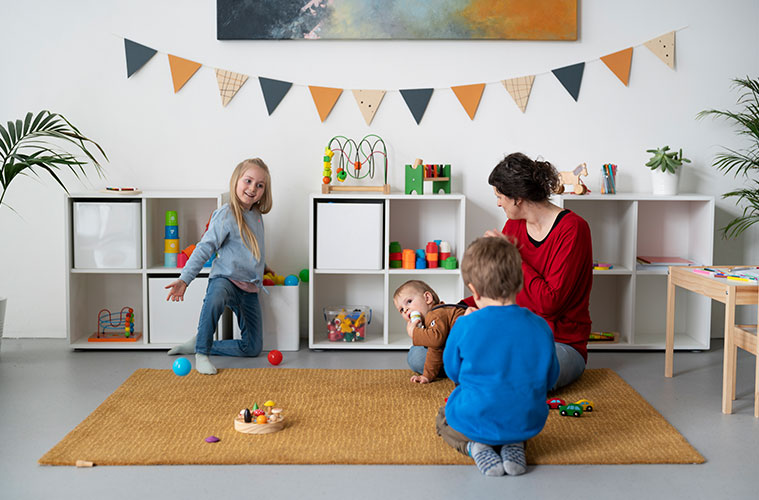
Room design can help the body feel safe so the thinking part of the brain can do its job. Predictable routines and clear signals reduce cortisol—the stress hormone that rises with uncertainty.
A few low-effort changes make a big difference:
- Visual schedule: pictures that show now, next, and later
- Quiet corner: books, putty, a breathing card, sand timer
- Sound control: soft surfaces, tennis balls on chair legs, calm voice levels
- Seating plan: near a steady peer and a supportive adult
- Transition cues: the same song, hand signal, or picture every time
Keep paths wide and shelves low so children can see across the room; open sightlines reduce surprise. Post simple rules with photos of children doing them. Teach the quiet corner as a short reset, not an escape. When the space says, “you are safe here,” children move from watchful to curious, which makes social steps easier.
Small Brave Steps Through Gentle, Planned Exposure
The most effective approach is gradual exposure: face a small part of the hard thing, then rest, then try again. Make a brave ladder with the child, moving from easy to hard. Each rung should feel doable, not scary. Pair steps with differential reinforcement—praise and small rewards for effort, not only for perfect speech or full participation. Use behavioral momentum: ask for two easy actions before the brave one to build flow.
An example ladder:
- Stand near the circle for one minute
- Sit on a helper chair behind the group
- Join the hello song, no speaking needed
- Answer one yes/no question for the teacher
- Share one sentence during show-and-tell
Keep trials short and frequent—three to five minutes works well. Track the rate of reinforcement (how often encouragement or tokens happen) so the brave act is worth it. When children learn “I can do hard things in small bites,” avoidance shrinks and confidence grows.
Simple Body Tools That Calm The Alarm
Body tools teach children to send a “safe” message back to the brain. Slow exhale breathing lowers heart rate and helps the thinking brain come back online.
Teach these skills during calm times first, then use them at hard moments:
- Smell the flower, blow the candle: breathe in through the nose for four, out through the mouth for six
- Five-finger breathing: trace a hand; breathe in going up a finger, out going down
- Turtle shell: pull shoulders in, pause, then open the body again
- Grounding game: name five things you see, four you feel, three you hear
- Talk track: short lines like “Feet on floor, slow air, I can try”
Pair a body tool with a picture card so any adult can prompt it. Rehearse during play, not only during stress. With repetition, the child can catch the worry early and stay with the group.
Working With Families As One Steady Team
Progress speeds up when home and school share the same steps and words. Begin with a short, friendly meeting to agree on two goals and a few daily actions. Keep goodbyes brief to prevent long stress spikes.
Build a simple home practice plan that mirrors school:
- Predictable goodbye: one hug, one phrase, then walk to a teacher
- Practice scripts: “Can I play?” “Want to trade?” said during calm play
- Mini ladders at home: wave to a neighbor, order at a counter, invite one friend for thirty minutes
- Cues that match school: same picture cards and same breathing words
- Weekly check-ins: one success, one next step, shared in a quick note or call
When adults use the same cues, the child does not have to relearn rules in each place, and brave habits stick.
Measuring Growth With Clear, Child-Friendly Data Tools
Light data keeps plans honest and hopeful. You do not need a long form—just the same few numbers each day. Use a tiny SUDS scale (0–10) with faces to show feelings before and after a task. Count how many times the child joins, speaks, or uses a body tool. Track minutes in a circle across the week. Short notes in the ABC format (Antecedent, Behavior, Consequence) help spot triggers and helpful responses.
Try this simple sheet:
- Date, task, SUDS before/after
- Joined group? Y/N and how long
- Tool used and prompt level (independent, gesture, verbal)
- What helped most today
Turn the numbers into a tiny line graph every Friday. If the line stalls, lower the step size or change the setting. These small checks keep the plan kind, steady, and effective without eating up class time.
A Warm, Practical Path For Every Child
Early social anxiety asks for small steps, steady routines, and kind teamwork. When adults use visual plans, short practice ladders, and calm body tools, children learn to try, rest, and try again. Families and teachers can share the same cues, so progress sticks. If you are seeking a setting that uses these simple, research-based ideas, Creative Montessori Preschool & Daycare is a preschool center that offers Preschool with warm structure and clear routines. Here, every small win counts—a wave, a word, a turn—each one building real confidence over time.